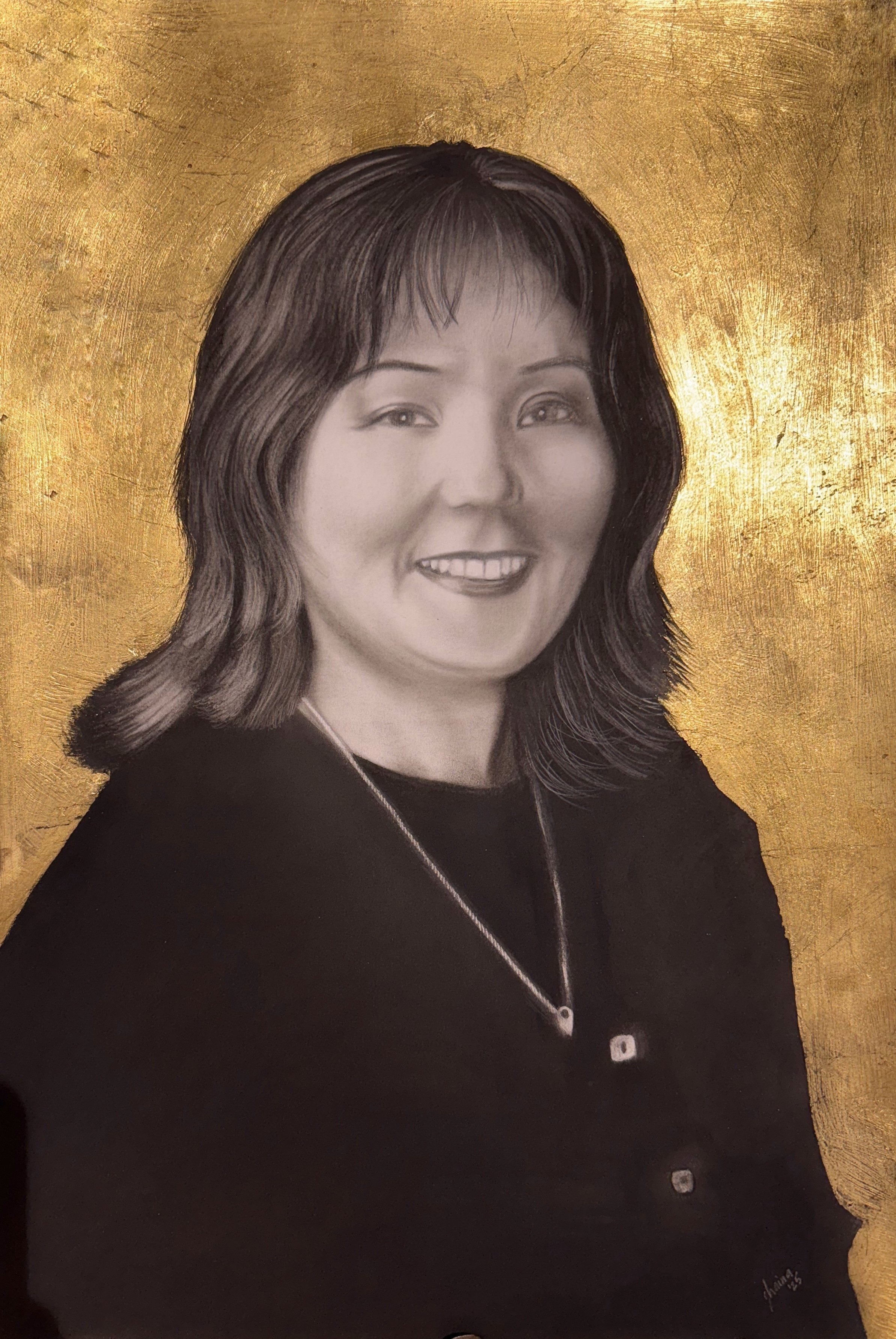
KAISHA ATAKHANOVA
WOW Woman Kazakhstan - Biologist
THE STORY
It is the year 2001. The National Atomic Company Kazatomprom of the Republic of Kazakhstan and five deputies of Parliament of Kazakhstan, secretly proposes legislation to permit commercial import and disposal of nuclear waste into the country. Billions that would be earned this way would be used to solve the countries already increasing nuclear waste. When this news was leaked to the public, one woman swiftly organised the countries NGOs to systematically oppose this law being passed, fought this battle legally and in an organised fashion and in 2003 after a long struggle, WON! Kaisha Atakhanova, just saved the planet and how!
Kazakhstan's nuclear waste issue traces back to the Soviet era when the Semipalatinsk Test Site, the primary nuclear testing ground, operated from 1949 to 1989. Nuclear testing equal to the explosion of 2,000 Hiroshima bombs was conducted there. The consequences of about 468 nuclear explosions at the Semipalatinsk Nuclear Test Site affected almost 1.5 million people of Kazakhstan: that is one in ten persons. Kazakhstan now houses 237 million tons of radioactive waste at more than 500 locations and await safe disposal. With Kazakhstan gaining independence in 1991, it inherited the responsibility of managing the aftermath. Efforts have been made to secure and remediate the site, but challenges persist. Additionally, the country faced the task of safely storing and disposing of nuclear waste generated from its growing nuclear industry. The 2001 legislation would have compromised this precarious situation further.
To take a stand against the government couldn't have been easy. Nor could have been the journey. I am most intrigued by Kaisha’s ‘Why’. What made her do it. Her answer is simple: “all of us - people living on planet Earth - are connected to each other by a single network of life. In the deepest sense of it. And the life takes place on our unique PLANET that radiates with the pure energy of the Universe in an endless transformation… So, my 30-year work dedicated to environmental protection is a tiny drop in the ocean consisting of the same kind of ‘pearls’ – large and small, local and global efforts of environmental activists throughout the world.”
Kaisha was born in Karaganda, Kazakhstan. Her father was a coal miner and also fought in the Second World War. Growing up, she felt comfortable in nature and had a strong interest in animals, which led her to study biology and become an environmental activist. The effects of radiation have affected her family, as both her parents and her sister have died from cancer. Her only other sibling, a brother, was also diagnosed with cancer. After graduating in biology from Karaganda State University, she began environmental and biological research in Lab of University. She did research in the Semipalatinsk Test Site and through this research was able to study the effects of radiation on environment and people health that had been directly affected.
In 1992, she founded the Karaganda Ecological Center (EcoCenter), which allowed her to work directly with people who have been exposed to radiation. Through her many years of environmental advocacy, Kaisha was able to lead a successful campaign to prevent nuclear waste from being commercially imported and disposed of in Kazakhstan. As a result of these efforts, the nuclear waste legislation not only was stopped, but the visibility of nuclear contamination issues reached new heights across the country. The budding grassroots civil society movement asserted its right and ability to challenge government's anti-democratic interests in an entirely new way. In addition, under Atakhanova's leadership, EcoCenter helped develop an environmental movement through EcoForum, a network of more than 100 NGOs nationwide.
Kaisha was awarded the international Goldman Environmental Prize in 2005 for leading a campaign to prevent nuclear waste from being imported into Kazakhstan. Since 2012 Kaisha works for the NGO “Civil Society Development Association “ARGO” which works for Afghanistan, Azerbaijan, Kazakhstan, Kyrgyzstan, Mongolia, Tajikistan, Turkmenistan, and Uzbekistan to efficiently plan and administer national, regional and international programs on civil society development.
Advocacy is never easy. Kaisha ends her interview with her 5 key learnings which are as follows:
First: A deep insight into the problem, conviction and confidence are enough to fight a battle even if it is Alone and within the law.
Second. Mobilizing others to participate in a great, soulful civic action.
Third. Response to a crisis should be deeply conscious, urgent, appropriate, innovative, practical and driven for positive change.
Fourth. Staying true to your mission and dream so that fear, despair, insecurity, and opposition will not defeat you.
Fifth. Share the joy of victory - big or small, as well as the bitterness of defeat with all the participants of the action. TOGETHER, EVALUATE THE RESULT, MAKE THE RIGHT CONCLUSIONS AND ACT AGAIN!
With these wonderful lessons for advocacy and for life, I wish Kaisha an unlimited amount of strength to ignite change, inspire many and save the planet, one country at a time.